If you’ve just caught up to the latest chapter and you’re itching to find more dark fantasy novels like Shadow Slave, you’re in the right place.
Whether you’re looking for dark progression fantasy novels with morally grey MCs, a dark, unforgiving world littered with monsters and a compelling mystery underneath, or a deep magic system with costs, I’ve got you covered.
I chose each of the books on this list for readers searching for the aspects I listed above. The best part is, I’ve actually read these novels, I didn’t just scrape blurbs from the internet. All five novel recommendations are stories I enjoyed as a Shadow Slave reader myself.
Not every book hits every note listed above, but each one will offer a similar satisfaction that Shadow Slave delivers.
TLDR - List of dark fantasy novels like Shadow Slave:
Click on any link below to learn what makes these novels similar or different to Shadow Slave.
- Lord Of The Mysteries (LOTM) by Cuttlefish That Loves Diving
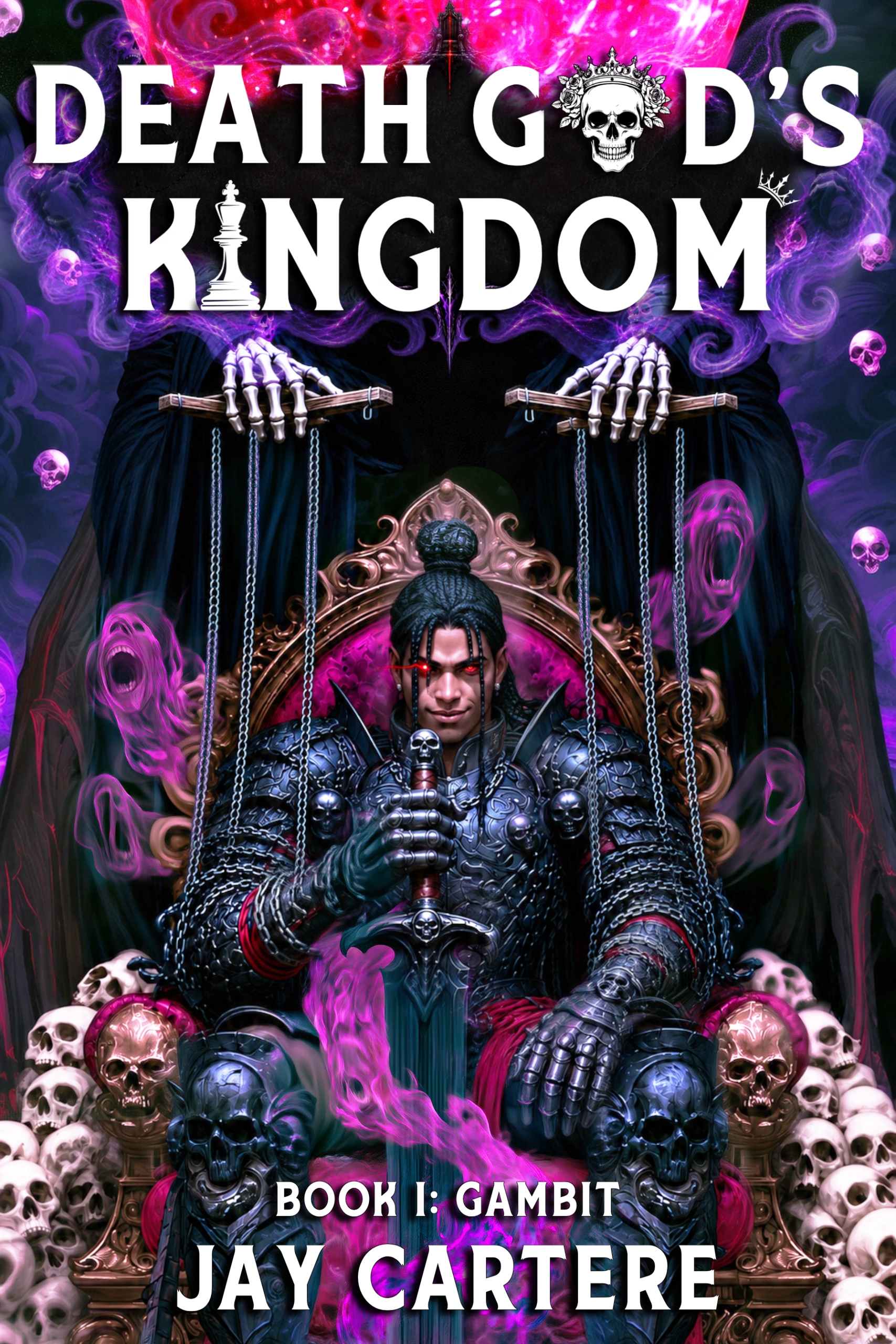
- Death God’s Gambit (DGG) By Jay Cartere
- Omniscient Reader’s Viewpoint (ORV) by singNsong
- Book Of The Dead by RinoZ
- Solo Levelling by Chu-Gong
Keep reading to find out how each novel compares to Shadow Slave, and which you’ll enjoy most.
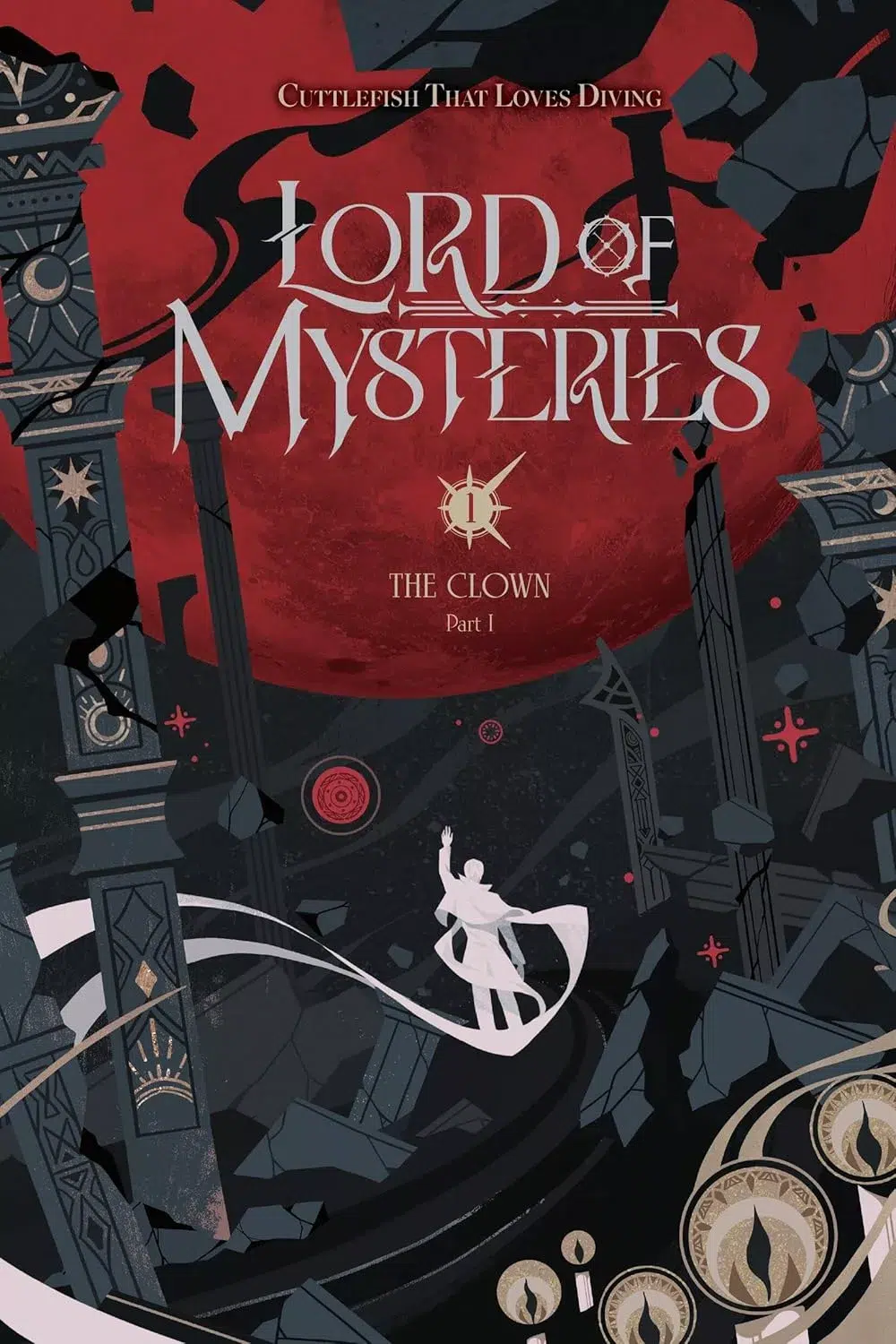
What makes this dark fantasy novel like Shadow Slave?
Mystery and Lore:
Both Shadow Slave and Lord Of The Mysteries (LOTM) hook you and keep you reading past bedtime to discover answers to their mysteries. LOTM has deep lore and history that fleshes out the world: ancient kings, gods executing thousand year long schemes, and all sorts of fun stuff.
Calculating MC:
Klein is a calculating MC, much like Sunny. He wins fights through preparation and cunning instead of brute forcing encounters with higher stats.
Dark Fantasy World:
Both stories have dark, unforgiving worlds where one wrong move can kill you. Lord of The Mysteries’ world is one you’d never wanna visit—taking a quick glance in the wrong direction could break your mind and turn you into a grotesque abomination.
Not fun to experience, but fun to read about.
Magic System:
LOTM’s magic system is complex but not overbearing. It doesn’t pelt you with numbers and stats at every corner. Abilities and power levels start simple and expand as you read.
Power also comes at a cost. Instead of a curse, LOTM’s beyonders must fight against insanity. But, truth is, this cost is only relevant and meaningful at the beginning of the story, then quickly forgotten.
Later on, the cost becomes trading humanity for power, though I never felt the story capitalised on that much.
Compelling Side Characters:
Lord of the Mysteries has a fun cast of characters with their own quirks, goals, and abilities.
The major side characters join the MC’s secret organisation to gain resources and assistance. It was fun to read their different interactions and reactions to each other and the MC.
What makes this novel different from Shadow Slave?
Setting:
Lord Of The Mysteries takes place in a Victorian steampunk setting.
The aesthetics are different, but both worlds feel dangerous. LOTM’s world leans heavily into lovecraftian horror. It feels like anything and everything is trying to kill the characters.
Oh, did you look at the moon for too long?
Now you’re a pregnant, corrupted abomination. Sorry about that.
The Dreaded Slog Of A Start:
It’s my responsibility to give you fair warning before you read this novel.
Shadow Slave has a fast-paced start that gets you into the action and story.
However, while Lord Of The Mysteries starts with an interesting mystery, the first volume soon becomes a slog to get through. It focuses on minutia that never comes up again. Though it’s an somewhat interesting insight into the world and characters, it drags the pacing to almost unbearable lows.
Good news is, the pacing picks up from the second volume onward. After the first 70 chapters, it doesn’t take its foot off the gas.
Whether you’re willing to wade through those chapters is up to you, but in retrospect I think it was more than worth sticking it out. The rest of the story makes up for its atrocious start.
Here’s why Shadow Slave readers will enjoy this dark fantasy novel
If learning more about Shadow Slave’s world, forgotten gods, and divine legacies had you hooked, then the mysteries and lore of Lord Of The Mysteries will keep you reading into the early hours of the morning.
The progression system in LOTM keeps you looking forward to the next advancement. New abilities have you flipping pages, wondering how the MC will put them to use. The artifact system is another intriguing concept that keeps fights fresh. Every artifact has interesting positives and negatives, and many artifact descriptions give you more of that delicious lore you crave.
Click here to discover 5 dark progression fantasy novels like Lord of the Mysteries.
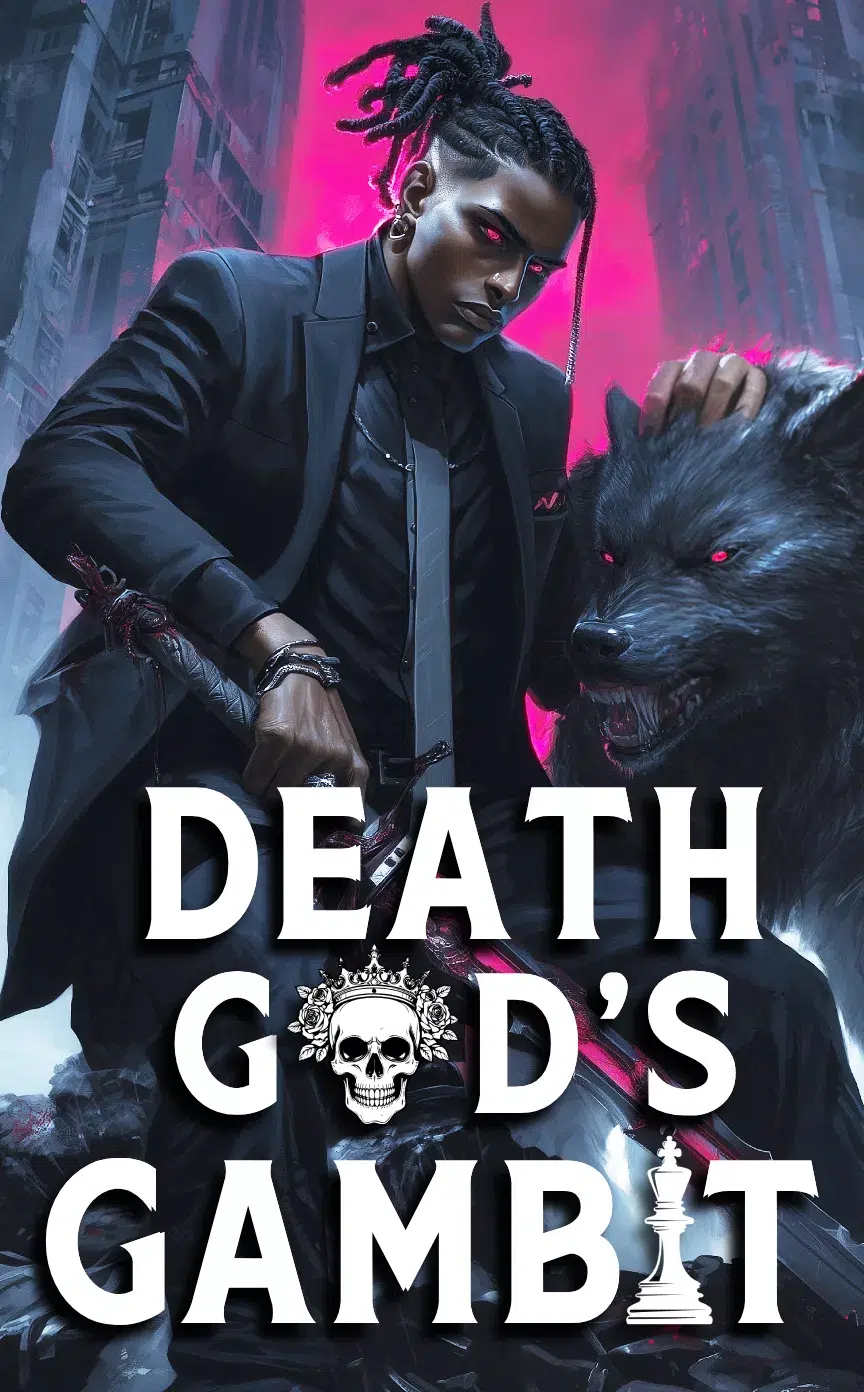
What makes this dark fantasy novel like Shadow Slave?
Cards on the table, I’m the author of this story. Shadow Slave and LOTM were my main inspirations, so there are many similarities.
Setting:
Death God’s Gambit’s setting is almost identical to Shadow Slave’s: A futuristic, post-apocalyptic Earth exists alongside a monster-filled, dark fantasy medieval world. Portals connect the two realms. And, like in Shadow Slave, the government maintains authority Earth-side, while powerful Noble Houses rule the Darklands.
Calculating, Sardonic MC:
Death God’s Gambit’s MC, Kai, starts with a spatial manipulation power, giving him an overpowered defence, but no offense. This forces him to strategise and use his brain to defeat enemies instead of punching them harder.
How does Kai beat a guy who has super hearing and can hear him coming, preventing him from using his efficient teleport and backstab combo?
You’ll have to read to find out, but the point is:
Fights are like puzzles Kai has to solve. The guy with the bigger number isn’t the automatic winner. Ascended (magic users) must use their intellect and intel to counter and overcome each other’s powers.
Like Sunny, Kai is sardonic and sees the world through a darkly humorous lens. Concise, but visceral, descriptions of unspeakable abominations and gory violence come with a side of British wit.
Mysteries and Lore:
DGG’s world is deep and considered. There’s a large pantheon of gods with their own agendas and schemes. Plus, many mysteries lie beneath the surface, pulling you from one page to the next.
Magic System:
The magic system takes a lot from Shadow Slave. Ascended gain Gifts (main powers) and Curses (price of power the Ascended must overcome) after completing the First Trial. To rise to higher Stages of power, Ascended must complete further Trials.
Sound familiar?
Instead of Memories, there are Artifacts, complete with backstories and additional lore.
Yes, I’m a treacherous thief—I won’t deny it.
Necromancer MC:
Like Sunny, Kai gains the ability to raise the dead. And, like in Shadow Slave, Kai can only control a few powerful summons in the story’s early parts.
Though the undead army comes soon enough.
What makes this novel different from Shadow Slave?
An Actual Villain Protagonist:
Let’s be real, Sunny is a good guy.
The start of Shadow Slave frames him as ‘treacherous’, but look at his actions: he cares about people, he saves lives selflessly, he gets upset when innocents die. He might play the villain, but when it comes down to it:
Sunny’s a moral, upstanding citizen who acts for the good of others.
Kai isn’t like that at all—he’s a right bastard.
Kai’s a true villain protagonist. A selfish criminal who breaks any rule for his own advantage, and only acts when it benefits him. You won’t catch Kai getting bummed out because a village of innocents died.
He might get annoyed at the loss of resources, but that’s about it.
He’s not totally cold though. Kai cares about those close to him. It’s just that everyone else is a disposable pawn.
Authoritarian Government:
Shadow Slave’s government was mostly benevolent. They acted for the good of humanity, wanted to save lives, nice stuff like that.
The Council in Death God’s Gambit is authoritarian, pervasive, and brutal. The propaganda department claims that the Council acts for the good of humanity, and questioning its claims is unhealthy.
Probably fatal.
Say the wrong thing in a private phone conversation? Bad move. Privacy’s a myth—a lie to trap people with subversive thoughts. People like you.
The Inquisition’s at your door. They don’t knock. Bang. Your door’s hanging off its hinges.
Masked men file in. Multiple arms grab you, binding you in chains.
Say goodbye to the sunlight. That’s the last time you’ll see it.
Crime Families:
In Sector Nine, the six Families extort local businesses, hijack supplies coming from the Darklands, and get up to all sorts of naughty activities.
But their main income stream, and the reason the Council allows them to ply their trade, comes from overseeing the Darkshard mines. Nobody except Family Dons and miners can enter.
The miners conveniently forget everything that happens inside. Nobody knows why. And they definitely don’t ask questions when miners go missing.
No Good Guys:
Everybody’s out for themselves in Death God’s Gambit. Nobody wants to save the world. Anyone who says otherwise is scamming you. Every character and institution is morally grey.
Kingdom Building:
After he barely survives his execution, Kai swears to get his revenge and take over his former Family. The first book follows him as he builds his circle of powerful capos from the ground up. Each side character has their own motivations, personality, and arc.
Kai splits his focus between growing his Family’s influence across the realms and building his kingdom in the Darklands.
If you wanna watch a character build an underground organisation and grow a small village into an empire, this is the story for you.
Political Intrigue:
Kai must juggle and appeal to the competing interests of noble houses, crime families, scheming gods and Council ministers. Pitting enemies against each other, negotiating deals, forming flimsy alliances—no option’s off the table.
Everyone’s playing their own angle, and most are looking for an opportunity to stick a knife in his back.
Kai’s survival depends on him getting them before they get him.
Here’s why Shadow Slave readers will enjoy this dark fantasy novel
If you loved Shadow Slave’s strategic fights, forgotten gods, and ascension to divinity, Death God’s Gambit has more of what you’re looking for.
The portal fantasy setup gives you the same contrast between a recognisable world and the fun of a dark fantasy medieval world.
You literally get the best of both worlds.
And since everyone has their own agenda and goals, instead of existing to service the MC, you’ll have no trouble finding your next favourite side character.
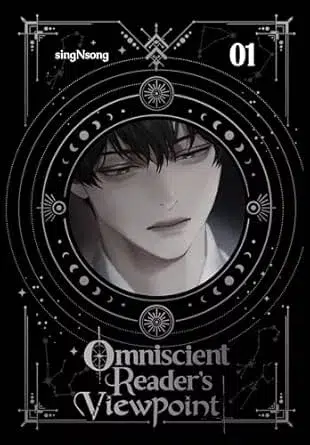
What makes this dark fantasy novel like Shadow Slave?
Setting:
Omniscient Reader’s Viewpoint takes place in a post-apocalyptic world. The fun part is, it’s all following the events of a webnovel the MC, Kim Dokja, read beforehand. The normal world becomes a nightmare. Average civilians transform into brutal murderers, and otherworldly monsters arrive to eat the survivors.
MC Is A Powerful Character’s Companion:
Like Sunny in Shadow Slave, Kim Dokja is more of a side character than the typical world-saving protagonist. Though Kim isn’t romantically involved with Yoo Joonghyuk like Sunny is with Nephis.
I think. I’m sure there’s a bunch of fanfics and shippers with a different interpretation.
Calculating MC:
Before he becomes OP, Kim relies on his knowledge of the future to get the best weapons and complete the Scenarios (kinda like trials—I’ll explain them in a sec). Since he starts out underpowered, he uses strategy and trickery to progress. Though having knowledge of future events is still a huge advantage.
Scenarios (They’re like Shadow Slave’s trials):
Imagine that Shadow Slave was all about the trials.
If you’re like me, that sounds amazing. ORV is basically that. It’s all about the Scenarios, which are like quests everyone needs to pass. Omniscient Reader’s Viewpoint consistently had me hooked, wanting to see how each Scenario played out.
ORV gives you way more Scenarios than the paltry amount of trials rationed out in Shadow Slave.
ORV is a feast.
What makes this novel different from Shadow Slave?
Meta Premise:
Takes place in a story the MC has read. This gives him knowledge of future events, and delves into meta concepts about stories, characters, and the like. There’s literally a skill called ‘Fourth Wall’.
Active Gods:
The gods here are more involved in the plot than the long-forgotten gods in Shadow Slave. We get to meet mythical figures like Thor, as well as angels like Uriel, and more.
Terrible Translation:
I dropped off around 90% through reading ORV for two reasons.
One: every fight became different shades of the same thing.
Two: the translation started to hurt my brain.
I’ve made my way through some mediocre translations, but this was something else. I had to decipher almost every other line like it was an ancient artifact. Better translations may be available when you’re reading this, so keep that in mind, but I couldn’t recommend this story without warning you.
Here’s why Shadow Slave readers will enjoy this dark fantasy novel
If you loved Shadow Slave’s trials and want more, ORV will give you a buffet of game-like scenarios and quests to keep you hooked.
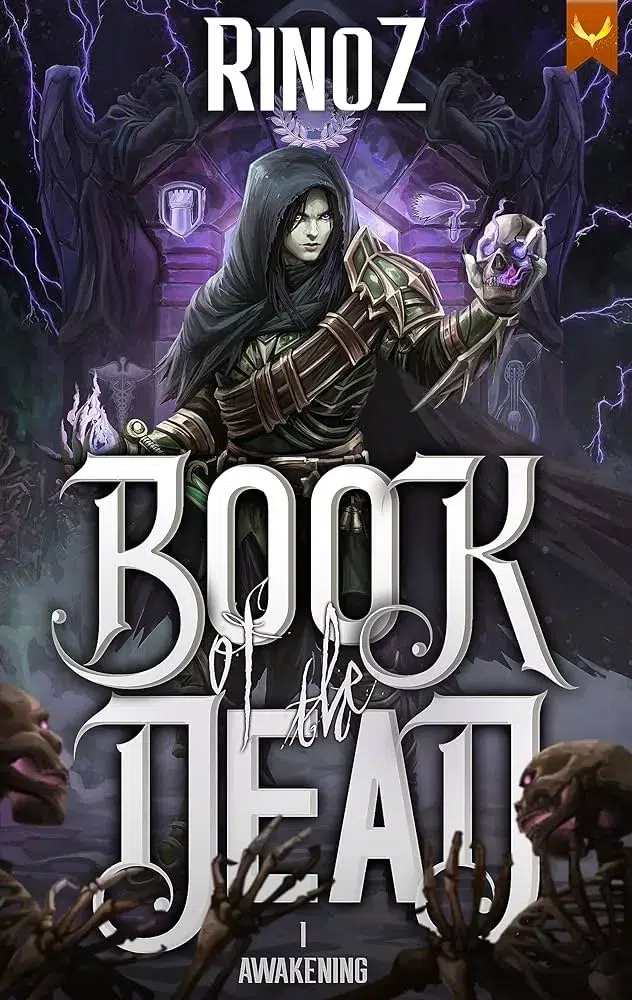
What makes this dark fantasy novel like Shadow Slave?
Necromancer MC:
Book of The Dead gets into the nitty-gritty of necromancy. From corpse robbing to buying bodies from criminals. If you enjoyed Sunny’s thread-crafting, Tyron, BOTD’s MC, uses a similar process to create his skeletal minions. Like Sunny’s forbidden lineage, Tyron’s necromancy is forbidden in his world, forcing him to hide his abilities and oppose the powers that be.
Calculating MC:
Having limited physical ability forces Tyron to plan and prepare before fights. He has to think outside the box and use his minions efficiently. Especially at the start of his journey when he only has a measly handful of skeletons. This makes his progression to building a skeleton army all the more satisfying.
What makes this novel different from Shadow Slave?
A Solo MC:
Because of his illegal class, Tyron spends most of the series alone, in hiding.
Less Action:
It felt like 70% of each book was focused on Tyron crafting skeletons and planning. This made the story feel slow as hell at times. The narrative drags sometimes, but when the action happens, it’s satisfying enough to make me forgive the boring downtime.
Quality Prose:
Shadow Slave’s writing is serviceable, but it’s not gonna win any awards. And that’s fine, because the story’s fun enough to overcome that. But Book Of The Dead has high-quality, well-written prose. It’s not overly descriptive and flowery either. This novel has some of the best writing in the LitRPG genre.
Hero To Villain MC:
Tyron begins the story striving to be a hero. But the more time passes, the more cynical and ruthless he becomes. It’s a fun journey watching him become the monster everyone accused him of being.
Here’s why Shadow Slave readers will enjoy this dark fantasy novel
If you enjoyed Sunny’s crafting and wanted more, Book Of The Dead has the goods. Its necromancy is all about crafting, and takes up a lot of story. The journey from Tyron using a few weak skeletons to building an army of wraiths and skeletal minions is satisfying and exciting. Plus, if you loved the parts of Shadow Slave where Sunny went solo—like the second half of the Forgotten Shore—you’ll get a lot of mileage out of Tyron’s solo grinding.
What makes this dark fantasy novel like Shadow Slave?
Necromancy Shadow Powers:
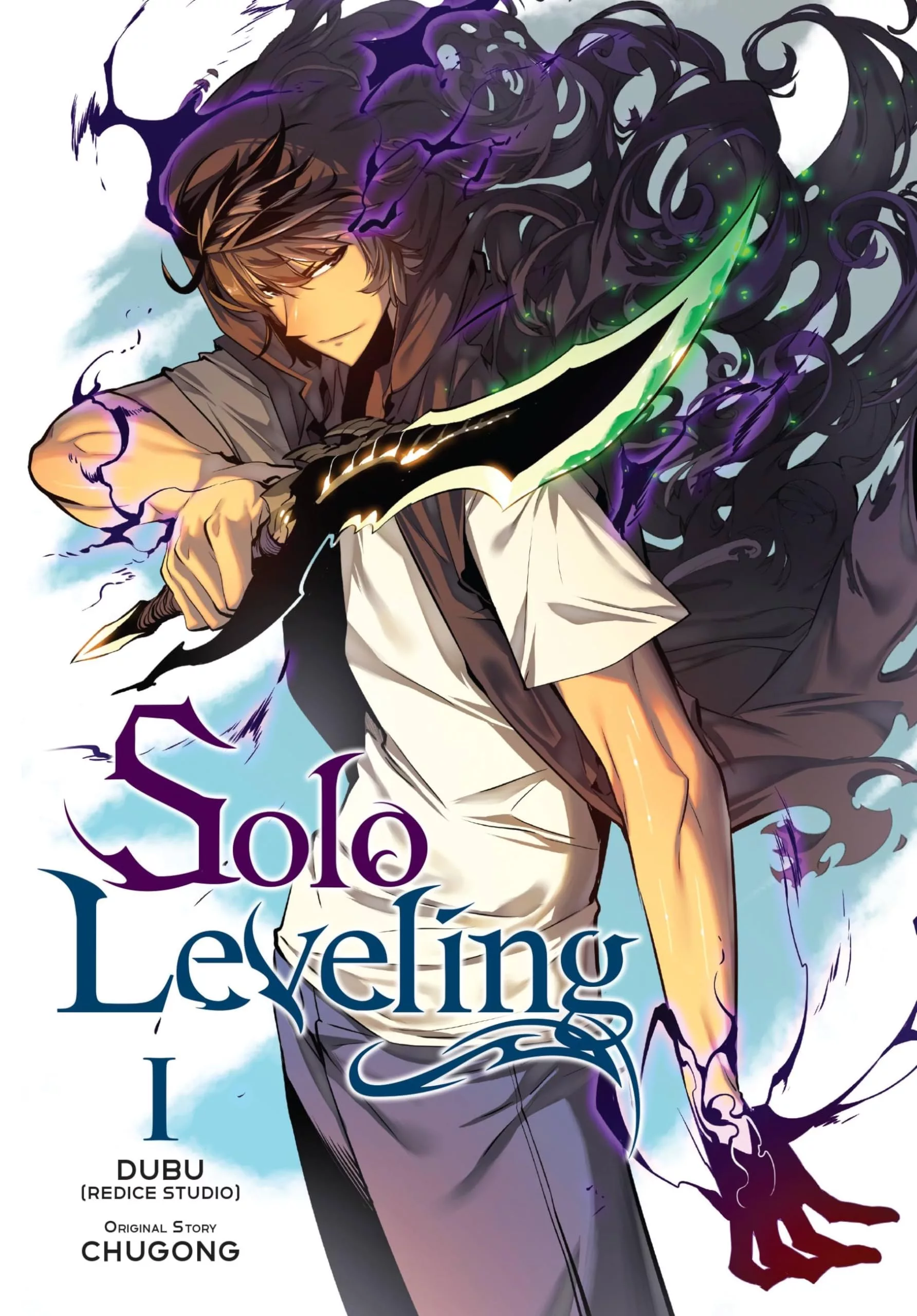
Solo Leveling has a shadow necromancy mechanic where Sun Jinwoo raises his fallen enemies as minions. He builds an impressive shadow army much faster than Sunny does.
Weak to Strong MC
Sun Jinwoo starts as a weakling—the weakest, in fact. But he soon grinds hard enough to become a powerhouse.
What makes this novel different from Shadow Slave?
OP MC:
While Sunny becomes overpowered eventually, Solo Leveling fast-tracks its MC to OP status. It isn’t long before Sun Jinwoo has an army of shadows, and any threat becomes a walk in the park for him.
Faster-Paced:
For clarification: I read the manhwa of Solo Leveling and haven’t read the novel version yet. But the pacing of the manhwa was miles faster than Shadow Slave. Another combat scenario lurked around every corner, and the power progression was a breeze. I’m assuming this breakneck pace carries over into the novel version.
Solo MC:
It’s in the name ‘Solo Leveling’, so this shouldn’t come as much of a surprise. Since Sun Jinwoo is so powerful compared to other hunters, he often operates alone or shows up at the last minute to aura farm and wipe out any enemies.
Here’s why Shadow Slave readers will enjoy this dark fantasy novel
Solo Leveling doesn’t make you read over 1000 chapters before Sun Jinwoo breaks out his shadow army. This is exactly the kinda thing you wanna see from a necromancer MC. And if you enjoy Sunny’s aura farming moments, Solo Leveling has that in spades. This is a fast-paced story with an OP MC who crushes enemies like an OP MC should. Progression is frequent and fast.
Which Dark Progression Fantasy Novel Should You Read First?
What do you want from your next read?
If you love Shadow Slave's mysteries and lore:
Read Lord Of The Mysteries next.
Its lore and mysteries will grip you and keep you up past ungodly hours. Plus, its dark world filled with cosmic horrors keeps the stakes feeling high and consequential.
If you loved Sunny scheming and creating a shadowy organisation:
Kai builds the foundations of his criminal empire from book one. He schemes, lies, and uses whoever and whatever he can to get what he wants.
If you loved Shadow Slave’s nightmare trials:
Read Omniscient Reader’s Viewpoint next.
The Scenarios are varied and plentiful. You’ll be eating well.
If you loved Sunny’s progression, but want more, faster:
It’s the prototypical power fantasy LitRPG. Sun Jinwoo becomes OP fast and crushes any who dare oppose him. He builds his shadow army faster than Sunny does, and the progression is more frequent.
If you loved Sunny’s crafting and necromancy:
Tyron is a crafter at heart. Most of the story centres on Tyron getting the materials he needs, gaining experience to craft better undead, and building his army of bony boys.
All of these novels will fill parts of that Shadow Slave-shaped hole while you wait for new chapters.
Want more great dark fantasy book recommendations? Click here to discover my 11 favourite dark fantasy series.
Got any suggestions I missed? Share it in the comments below.