What is LitRPG?
LitRPG (Literary Role-Playing Game) is a fantasy fiction genre where the world has game mechanics like experience points, stat sheets, leveling systems, and skill trees. LitRPG books blend fantasy stories with progression systems found in video games and tabletop RPGs.
Have you stumbled upon a book or post, saw a genre you didn't recognise and thought "what is LitRPG?"
The good news is, you're in the right place. This blog post gives you everything you need to know about LitRPG books.
If you're a gamer, love anime, or enjoy reading stories with game-like elements, LitRPG novels might be perfect for you.
Maybe you're an author and you need an easy way to explain the story you're writing. Send this blog post to whoever you're explaining to - and they'll understand what a 'LitRPG' is by the end of this post.
How LitRPG Stories Work
I've already given you the definition of LitRPG, but here's how it works in stories:
Characters can often see their abilities measured by statistics, gain levels by defeating enemies or completing quests, and unlock new abilities as they grow stronger.
The best LitRPG novels integrate game mechanics into their world-building, plot and character development.
Most LitRPG series include a stat sheet that shows the character’s abilities and attributes. These stories create a sense of progression that mimics the feeling of levelling up in a RPG game.
Some of your favourite anime series were adapted from Japanese LitRPG webnovels, including "Sword Art Online", "Overlord", and "So I’m a Spider, So What".
Example of LitRPG Novel Series
These examples show how LitRPG stories integrate game mechanics into different settings and styles.
- So I’m a Spider So What by Okina Baba: A high school girl reincarnates as a weak spider monster in a deadly dungeon RPG world. She must grind her way up from the bottom of the food chain using cunning and stat optimisation.
- Overlord by Kugane Muruyama: A salaryman gets trapped in the body of his powerful skeletal mage character when his favourite MMORPG’s servers shut down. He gradually builds a dark empire in a new world while searching for other players.
- Sword Art Online by Reki Kawahara: Thousands of players get trapped inside a VR MMORPG where death in-game means death in real life. One elite player fights to clear all 100 floors and free everyone.
- Solo Levelling by Chugong: In a world where hunters fight monsters through magical gates, the weakest hunter alive gains a unique ability to level up—something no one else can do—and ascends to become the most powerful being on Earth.
- Dungeon Crawler Carl by Matt Dinniman: After an alien apocalypse destroys the surface world, a man and his ex-girlfriend’s cat must compete in a brutal, televised underground dungeon crawl watched across the galaxy.
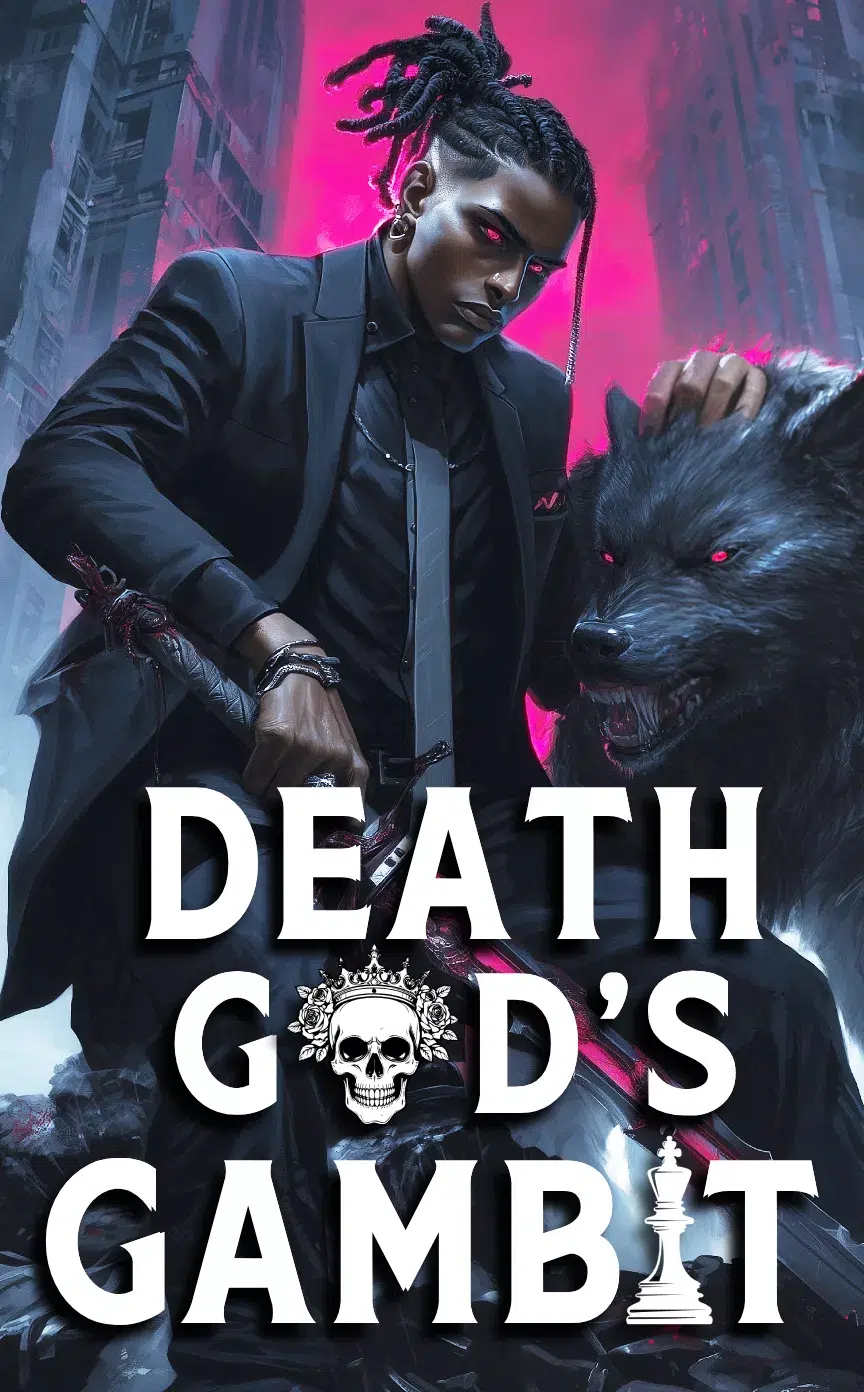
- Death God’s Gambit by Jay Cartere: Death God’s son navigates mob politics and divine conspiracies across a futuristic Earth and a dark medieval realm. He must complete deadly trials and form shaky alliances to grow his power and build his mafia empire.
- The Primal Hunter by Zogarth: An office worker becomes stranded in a deadly new world integrated with a system, forcing him to hunt, level up, and survive while humanity adapts.
- He Who Fights With Monsters by Shirtaloon: An Australian gets transported to a fantasy RPG world and must grind, strategise, and grow stronger to survive.

The History and Origins of LitRPG
Russian LitRPGs (EKSMO)
One of the earliest books to categorise itself as a LitRPG was "AlterWorld: Play to Live" by Dmitry Rus. Although there are likely many books that include similar concepts, they weren’t categorised as LitRPG books at the time.
Russian authors and publishers were the first to establish LitRPG as its own genre with specific tropes and expectations.
EKSMO, one of Russia’s largest publishing houses, began publishing LitRPG as an official genre in 2013. The term “LitRPG” was coined in late 2013 during a brainstorming session between writer Vasily Mahanenko, EKSMO’s science fiction editor Dmitry Malkin, and fellow LitRPG series editor and author Alex Bobl.
Vasily Mahanenko’s “The Way of the Shaman” series, published in 2013, became one of the LitRPG genre’s defining works. The series follows a convict trapped in a virtual reality MMORPG. The story includes stat progression, crafting systems, and guild politics.
Eastern LitRPG Books (Japan, Korea, Taiwan)

Japan’s contribution to the genre began with light novels in the 1990s and early 2000s that incorporated RPG elements. Though these stories predated the official LitRPG label. Series like “.hack” explored virtual worlds with game mechanics. “Sword Art Online” (2009) later became a global phenomenon and helped popularize the “trapped in a game” and “Isekai” tropes. These stories are perfect for readers who love anime (many popular anime are adapted from Light Novels).
Korea’s LitRPG webnovels introduced many authors and readers to the genre. Korean LitRPG typically features a “system apocalypse” scenario. This is where game mechanics invade the real world, forcing ordinary people to adapt or die. Stories like “The Legendary Moonlight Sculptor”, “Solo Levelling” and “Omniscient Reader’s Viewpoint” are some of more popular ones. Korean LitRPGs often emphasize ruthless competition and dramatic power scaling. Perfect for readers seeking high-stakes action.
Chinese LitRPG has many stories in the cultivation and xuanhuan subgenres. Characters progress through mystical cultivation stages similar to leveling systems. These aren’t always classified as LitRPG, but these progression fantasies share the genre’s DNA. They often include tropes like quantified power growth, systematic advancement, and clear hierarchies of strength.
These Eastern LitRPGs introduced concepts that became staples of future LitRPG books. Status windows, dungeon raids, monster ranking systems, and the MC grinding their way to godlike power. Translators shared these stories through platforms like Royal Road and Webnovel, inspiring many of the western LitRPGs today.
Western LitRPG Books

When English translations of Russian LitRPG novels began appearing in the mid-2010s, English-speaking readers lapped it up. Gamers enjoyed reading stories that felt like their favourite RPGs. Many male readers, who found themselves ignored by traditional publishing, realised the LitRPG genre had stories that spoke to them.
LitRPG books focusing on power fantasies are to men what Romantasy is to women.
Eastern and Russian LitRPG stories inspired many first-time authors to write and publish their own LitRPG series. Amazon’s Kindle Direct Publishing platform helped them reach readers without needing approval from traditional gatekeepers.
Indie authors and publishers still dominate the LitRPG genre today.
Sites like Royal Road give LitRPG authors like me a platform to publish their stories, build a fanbase and get feedback on their writing. Royal Road attracts around 14 million views per month and continues to grow. Catering to young male readers who love LitRPG and Progression Fantasy, it’s the perfect platform for new authors to get their work in front of people.
Many successful Western LitRPG authors post free chapters on Royal Road before publishing on Amazon. Indie publishers focused on LitRPG stories also use the site to find new stories to sign.
There’s a tried and true business model of posting free chapters to Royal Road, offering advanced chapters on Patreon, then publishing on Kindle Unlimited.
Some popular Western-based LitRPG authors are:
- Dakota Krout (Divine Dungeon)
- Tao Wong (The System Apocalypse)
- Matt Dinniman (Dungeon Crawler Carl)
Western LitRPG distinguish themselves with native English writing. This usually leads to better quality writing than translated novels. Though the LitRPG genre is still known for its amateur writing. The good news is, this makes well-written LitRPG books stand out among the rest.
The rise of audiobooks introduced many new readers to LitRPG stories. Narrators have become stars themselves. For example, Jeff Hayes has become a staple of the LitRPG genre, narrating many popular series like "Dungeon Crawler Carl".
LitRPG books are a growing market in the West, with no sign of slowing down.
Where Did The LitRPG Term Come From?
The term “LitRPG” originated in Russia. It’s a combination of “Literature” and “RPG” (Role-Playing Game). The Russian version is “ЛитРПГ” (LitRPG).
The LitRPG term gained traction around 2013 when Russian authors and publishers needed a label to categorize this emerging fiction style.
Stories with RPG elements had existed before, but this marked the formalisation of “LitRPG” as a subgenre. This made it easier for fans to find novels with game mechanics at their core.
Dmitry Rus, a Russian-American author who translated and wrote LitRPG novels, helped bring the LitRPG term to English-speaking audiences. He established the LitRPG Forum and promoted the term in Western markets.
Key Features Of LitRPG Books

Game Mechanics and Stats
A system of quantifiable mechanics governing how the world operates is the core concept of LitRPG books. Characters progress through measurable systems like stats and abilities. LitRPG novels focusing heavily on stats are called “crunchy”. These stories include deep stat sheets with metrics like those in RPGs: Strength, Intelligence, etc.
Stories including game elements without explicit stats—or stories with vague systems—are called “GameLit”. GameLit books often focus less on stat numbers and more on skills, abilities and items.
Game Mechanics and Stats Example
For example, after defeating a dungeon boss, a character might see:
[Quest Complete: Defeat the Corrupted Guardian]
Rewards: +500 XP, Rare Loot Box, +10 Reputation with the Shadow Guild
[Level Up! You are now Level 12]
+5 Stat Points Available
New Skill Unlocked: [Shadow Step]
The character then allocates their points:
Strength: 24 → 26
Dexterity: 31 → 33
Intelligence: 18 (unchanged)
Numerical stats, as well as other game mechanics, make tracking progression easy and satisfying for the reader…for the most part. Some LitRPG stories include so many stats and math that they become unwieldy. But it’s usually easy enough to spot the numbers going up, even when skimming the more complex stats screens.
Authors can also use stats to show things like low health or a character almost reaching a level-up to introduce tension or anticipation.
Different LitRPG series emphasize different mechanics. Some novels feature intricate class systems with branching specialisations, while others keep it simple with a few core stats. The thing that matters is in-world consistency. Readers expect the system to operate somewhat predictably, although the MC usually has a special advantage.
Character Progression and Levelling

Consistent character progression is a key factor that makes LitRPG novels addictive. Readers get a similar dopamine hit from watching stats increase as they would from playing video games. Watching a character grow from a level 1 nobody into a powerhouse creates a satisfying narrative. This keeps readers turning pages into the early morning hours.
Different LitRPG books have different levelling systems.
Some stories mirror tabletop RPGs. The characters accumulate experience points, gaining levels and stat points. Level increases often come with new abilities and increased power that affect the story.
Other LitRPG books use skill systems that allow characters to improve abilities through practice. For example, a character might increase their swordmanship level through combat or sparring.
Character Progression Notification Example
[Sword Mastery has increased: Novice Rank 5 → Novice Rank 6]
Effects: +2% Damage with Swords, +1% Attack Speed
Progress to Intermediate Rank: 45/100 successful strikes
After enough practice, they hit a breakthrough:
[Sword Mastery has advanced: Novice → Intermediate]
New Technique Unlocked: [Piercing Thrust]
Damage bonus increased to +15%
Class advancement is another progression layer. A Warrior might specialise into a Berserker or Guardian, changing their combat role and gaining new abilities.
The best LitRPG novels intertwine progression with plot. Instead of levelling up randomly, the character progresses at narratively poignant moments. For example, a character might gain a new ability after overcoming a personal challenge. Creating synergy between mechanical growth and an emotional arc makes the story more satisfying. Instead of gaining power arbitrarily, each gain is another step toward the character’s goals.
Authors must balance the protagonist's progression speed to keep the story engaging. Fast progress can destroy stakes or lead to ever-escalating threats and sloppy worldbuilding (I call this dragon ball syndrome). Slow progress can bore readers. Finding the sweet spot of consistent, meaningful progression is essential to writing engaging LitRPG stories.
Quest Systems
Quest systems give LitRPG novels measurable goals. They often come with defined rewards, building curiosity and suspense. Readers ask themselves: what will this new item do? Will the MC fail or succeed?
Quests in LitRPG books operate like quests in video games. The protagonist may be tasked with defeating an enemy, collecting an item, or completing a more open-ended objective. The important thing is that the quests have clear success conditions and rewards.
Sometimes quests have surprise hidden conditions or rewards, but the core of the quest is usually clear.
Some LitRPG series have dynamic quest systems that respond to player choices. Moral decisions might spawn different follow-up quests; failing a quest could open alternative storylines instead of penalising the character. Chain quests can build epic storylines across multiple objectives, revealing new layers with each completion.
Quest failure is another interesting tool.
Protagonists don’t have to succeed at everything, especially if the consequences of failing a quest are minor. Sometimes failing a quest may be better for their goals than succeeding. This allows the author to introduce real stakes into the story. Early failures make later successes feel even more rewarding.
Authors can use quest systems to help manage the scope of their stories. Breaking down big goals into smaller steps, maintaining a sense of consistent progression. This keeps the reader engaged while building toward an epic climax.
Quest Notification Example:
[New Quest: The Merchant’s Dilemma]
Type: Optional Side Quest
Objective: Retrieve stolen goods from the Crimson Bandits (0/5 crates recovered)
Time Limit: 48 hours
Rewards: 200 Gold, +15 Reputation with Merchants Guild, ???
Failure Penalty: -10 Reputation with Merchants Guild
[Quest Update: The Merchant’s Dilemma]
Hidden Objective Discovered: Return goods without bloodshed
Bonus Reward: Bandit’s Respect (+5 Reputation with Crimson Bandits)
LitRPG vs GameLit vs Gamebooks (choose your own adventure books): The Differences

The different terminology surrounding game-inspired fiction often confuses new readers. That’s one of the reasons I’m writing this post. Understanding the difference between these terms makes it easier to find the type of story you’re looking for.
So, what’s the difference between LitRPG, Gamelit, and Gamebooks?
LitRPG Books
As I’ve already said, LitRPG series feature game mechanics as integral story elements—stat screens, experience points, levelling systems, and numerical progression characters can interact with. Characters live in worlds governed by game rules. If you’re reading about a character who gains a new ability after defeating an enemy or can see their stat screen, chances are you’re reading LitRPG.
GameLit Books
GameLit is a broader umbrella term encompassing LitRPG and other game-influenced fiction. GameLit novels have game-like elements without the hard numbers or stat screens. For example, a character might become stronger through training without seeing their exact stats increase. They might complete quest-like objectives without getting system notifications. GameLit’s mechanics are often beneath the surface instead of quantified in numbers.
Some stories straddle the line between LitRPG and GameLit, featuring occasional stat screens without making them core to the story. These novels are great entry points into the LitRPG genre because they don’t overwhelm the reader with numbers. I used this approach in my story “Death God’s Gambit”.
Gamebooks
Gamebooks are an entirely different beast from the previous two. These are interactive fiction books where the reader makes choices that determine the story’s direction.
More commonly known as “Choose Your Own Adventure” books.
Modern Gamebooks feature complex branching narratives, inventory management, combat systems, and multiple endings based on reader decisions. "Fighting Fantasy" and "Lone Wolf" are classic gamebook series that let readers roll dice and track their character’s stats through adventures.
While gamebooks share game mechanics like LitRPG novels, the difference is interactivity. LitRPG books are novels with game mechanics, Gamebooks are interactive fiction where your choices determine the story’s outcome.
Popular LitRPG Subgenres and Types
System Apocalypse
System Apocalypse LitRPG series add game mechanics to the modern world—it doesn’t end well, hence the ‘apocalypse’. Some sort of higher being often forces a system on humanity, making them fight for survival. Monsters and other enemies appear, while ordinary citizens gain the ability to level up like in an RPG.
This subgenre blends the satisfying progression mechanics of LitRPG books with post-apocalyptic survival horror. The protagonists usually begin as normal people thrust into a terrifying situation and forced to adapt. Mundane cities become death-traps filled with monsters hell-bent on killing people. Classic creatures like goblins and dragons might crash into your local corner shop.
Characters who adapt to the system become powerhouses, while those clinging to their old lives die horribly.
System apocalypse novels offer readers a survival power fantasy. You’ll watch ordinary people adapt to a terrifying reality. Readers enjoy protagonists leveraging their gaming knowledge to survive while others panic, turning the apocalypse into an opportunity. The reader imagines “What would I do if this happened to me?” while showing how a society might rebuild with RPG mechanics replacing old power structures.
Examples of System Apocalypse Series:
- Dungeon Crawler Carl by Matt Dinniman
- The System Apocalypse by Tao Wong
- Omniscient Reader’s Viewpoint by singNsong
- Death God’s Gambit by Jay Cartere
Virtual Reality LitRPG
Virtual reality was one of early LitRPG’s most popular tropes. The VR system gives readers a logical explanation for including game mechanics in the novel. In VR-based LitRPG series, protagonists enter fully immersive digital worlds with advanced technology like neural interfaces, virtual reality pods, or brain-computer connections. This leads to the game world being indistinguishable from reality.
This setup eases readers into accepting game mechanics overlaying the world. But the LitRPG VR subgenre has since fallen out of popularity. Many readers complain about the lack of stakes.
Modern VR novels sought to bypass this concern in different ways:
Connecting success in the VR space with financial success in the real world (Eternal Online). Having the VR game replace the real world (Overlord). Or trapping the protagonist within the VR game (Life Reset: New Era Online).
The VR trope gives authors an easy way to deliver exposition about game mechanics included in the story. A game-like tutorial feels natural to readers used to playing video games.
VR LitRPG series can capture the emergent narrative fun of playing video games, without the grind or time-investment of actually playing.
Examples of VR LitRPG Series:
- Life Reset: New Era Online by Shemer Kuznits
- Sword Art Online by Reki Kawahara
Dungeon Core

Dungeon Core LitRPG books have a sentient dungeon as the protagonist.
The protagonist is often bound to a crystal core or otherwise stuck in one place. They can spawn monsters, shape their environment and lay traps. They gain experience and power when adventurers die in their territory. This creates a dynamic where the dungeon needs to balance attracting challengers while killing them efficiently.
This subgenre appeals to readers who enjoy base-building, strategic thinking, and creative problem-solving.
Dungeon core stories often explore the dungeon’s relationship with nearby settlements. Some dungeons form symbiotic relationships with towns, providing training grounds and resources for the inhabitants. Others become existential threats, prompting kingdoms to mobilise armies against them.
Another flavour of Dungeon Core are “Reborn as a Tree” stories. They use many of the same building blocks, but the protagonists are trees instead of dungeons.
Examples of Dungeon Core Series:
- Tree of Aeons by SpaizZzer
- Dungeon Core Online by Jonathan Smidt
- Divine Dungeon by Dakota Krout
Isekai LitRPG
Isekai LitRPG novels combine the Japanese isekai genre with RPG game mechanics. “Isekai” means “another world” in Japanese, and is a popular genre in their webnovels, light novels, manga and anime.
These stories transport protagonists from our Earth to fantasy realms governed by game systems. This subgenre gives authors an easy way to deliver exposition to the reader because we get to learn about the new world alongside the MC.
Characters often have an advantage due to them playing RPGs on Earth. This results in them using optimal builds, exploiting loopholes or understanding concepts the native characters don’t.
The major appeal of isekai books is experiencing a new world and watching the protagonist grow in power. Deep worldbuilding and progression are the hooks keeping the reader turning pages.
Isekai stories often feature a protagonist who was a loser on earth, but becomes overpowered in the new world. Making it perfect for readers craving a power fantasy.
Some stories reincarnate the protagonist into the fantasy world, beginning life as a baby or assuming the role of a prominent character. Other isekai novels transform the protagonist into a monster, giving readers a unique POV into the world—these are called “Monster Evolution” novels.
Examples of Isekai LitRPG Series:
- Jackal Among Snakes by Nemorosus
- He Who Fights Monsters by Shirtaloon
- Overlord by Kugane Muruyama
Cultivation

Cultivation LitRPG stories merge Eastern cultivation fantasy—where characters advance through mystical stages of power—with Western RPG systems.
Traditional cultivation stories feature martial artists absorbing spiritual energy (qi, mana, essence) to ascend through realms, stages or tiers. Each breakthrough transforms the cultivator, granting new abilities and extending their lifespan.
With added LitRPG mechanics, these advancement stages become quantified and available in a status screen. Characters might see “Foundation Stage (Level 3)” displayed on their status screens, or be able to track their incremental progress toward the next stage. Techniques become skills with ranks and experience bars.
The cultivation subgenre emphasises ruthless competition and hierarchy. The world often operates on “might makes right” principles. Powerful cultivators command respect, while exploiting weak ones. Resources are scarce and rivals are constant. Reputation matters.
Protagonists often start with disadvantages, like being poor and weak, before they rise to power. This makes their progression more satisfying for the reader.
Cultivation LitRPG stories appeal to readers who like long-form progression across vast power scales. Stories might start with the protagonist as a mortal peasant, but end with him becoming a god-like immortal who shatters planets.
Example of Cultivation LitRPG Series:
- Beneath the Dragoneye Moons by Selkie (healer cultivation MC)
- The Path of Ascension by C_Mantis
- Paranoid Mage by InadvisablyCompelled
- Virtuous Sons by Ya Boy Kong
Crafting LitRPG Books
Crafting LitRPG books focus on creating things over punching things hard. Protagonists are crafters, enchanters, architects, or merchants whose progression comes through making things.
These stories give readers the satisfaction of seeing the protagonist build something from nothing.
A necromancer might start by robbing graves, assembling magic threads to raise skeletons. Gradually progressing to batch-producing wraiths and binding souls to bones.
The crafting subgenre often includes detailed crafting systems with resource gathering, recipe discovery, and market economics. Readers enjoy the puzzle-solving aspect of optimising production chains, finding synergies between skills, and watching characters improve their craft.
Combat still occurs, but it’s usually a secondary aspect. Protagonists might hire adventurers to gather rare materials, or their creations might protect them when danger comes knocking. Tension comes from resource scarcity, market competition, and the challenge of meeting customer requirements.
Crafting LitRPG satisfies a different fantasy than combat-focused stories. Instead of becoming the strongest warrior, protagonists become the richest merchant or the most skilled crafter. Economic influence, reputation and production quality measure success and progression.
These stories appeal to readers who like the economic and crafting aspects of games like “Minecraft”, “Factorio”, or “Stardew Valley”.
Examples of Crafting LitRPG Series:
- Book Of The Dead By Rinoz
- Beneath the Dragoneye Moons by Selkie
- Quest Academy by Brian J Nordon
Settlement/Kingdom Builder LitRPG Series

Settlement/Kingdom builder LitRPG books focus on the protagonist building and managing a settlement or kingdom.
Protagonists transform wilderness into thriving towns. Then turn thriving towns into cities and kingdoms. Conflict focuses on managing resources, attracting citizens, political intrigue, and defending against threats.
A good kingdom building novel gives readers satisfying progression of population, scale, technology and stakes. You get to watch a small and weak group grow into a powerful kingdom.
The protagonist has to solve problems like securing a food source for their population. Or deciding whether to interfere with neighbouring kingdoms.
These stories still include combat, but the core power fantasy focuses more on becoming a competent leader, building a well-functioning kingdom, and growing the nation’s reputation.
This subgenre is perfect readers who like strategy games, management games and stories that focus on those elements. The sad part is, kingdom builder focused novels are rare. It’s easier to find LitRPG stories with some kingdom building elements like “Overlord”.
Examples Of Kingdom Builder LitRPG Series:
- Release That Witch by Er Mu
- Death God’s Gambit by Jay Cartere
- Life Reset: New Era Online by Shemer Kuznits
- Tree of Aeons by SpaizZzer
Roguelike/Timeloop LitRPG series
Roguelike LitRPG books take inspiration from the video game genre of the same name. Stories revolve around the protagonist failing, then restarting their journey while retaining prior knowledge, some skills, and advantages. Each run becomes easier, or characters attempt different routes and plans until they find a successful path.
Roguelike stories often use time loops to implement their mechanics. Protagonists die or fail, then restart the loop with new stuff. Everyone else forgets and resets. Some stories give the protagonist a respawn ability instead.
This subgenre gives readers a compelling optimisation puzzle. The protagonist learns more with each run, keeping the reader turning pages to solve the mystery. Watching patterns emerge and the protagonist getting closer to their goal keeps the reader hooked.
These stories are perfect for readers who enjoy uncovering a mystery and watching a protagonist fail until they succeed.
Examples of RogueLike/Timeloop LitRPG Series:
- The Perfect Run by Maxime J. Durand
- Loopshard by Dosei
Portal Fantasy LitRPG Series

Portal fantasy LitRPG series are similar to isekai stories with one major difference—the ability to return to the original world. Both subgenres revolve around the protagonist leaving Earth and going to a fantasy world. But portal fantasy books allow the protagonist to travel between worlds using portals.
The portals aren’t always easy to access, but they represent a clear path back to the original world. Isekai stories often don’t include an option to return, or the method is a mystery. Some stories start as isekai, then introduce portals later.
Portal fantasy stories have the same appeal of isekai stories. Worldbuilding and power progression are key. But there’s the added appeal of seeing how interacting with the new world affects Earth. The portals are integral to the world and story in series like “Shadow Slave” and “Death God’s Gambit”.
These new worlds offer new resources and opportunities. If characters travelling to the new world gain advantages and power, how does that affect the society we know? How do the existence of these portals affect the world? These are the kinda interesting questions that can be explored in portal fantasy stories.
Protagonists either need to go through portal to get stronger and gain rare resources, accidentally enter, or they’re forced through.
Portal fantasy series are perfect for readers who enjoy isekai but wanna scratch the itch of seeing the powerful protagonist return and affect earth.
Examples of Portal Fantasy LitRPG Series:
- Shadow Slave by Guilty3
- Death God’s Gambit by Jay Cartere
Villain MC LitRPG Series
Villain MC (MC: Main Character) is a subgenre unto itself, but it doesn’t operate alone. Villain MCs can fit into many different subgenres. These stories follow the perspective of a villanous character. A despicable rogue who’s willing to do unspeakable things for the sake of their goals.
Ruthlessness and self-interest replace morality and honour.
Adding a villain POV changes the way the story works. This appeals to people tired of goody two shoes heroes saving the world. A villain might save the world, but his reasons are different from a hero’s. While the hero wants to save the world because it’s the right thing to do—to save lives or some boring motivation like that. The villain wants to save the world because it serves his goals. After all, he lives in the world doesn’t he? The things he values are in that world too.
But if the villain figures out a way to save the stuff he values without saving the world, he’ll do it.
Villain protagonists often build their evil empire or enact their villanous plans while avoiding authority and using underhanded tactics. Villain MCs are usually smart or overpowered.
Readers who try the evil playthrough in RPGs, wanna dive into a morally grey world, or wanna see a bad guy doing bad things will love these stories.
Examples of Villain MC LitRPG Series:
- Death God’s Gambit by Jay Cartere
- Overlord by Kugane Muruyama
- Reverend Insanity by Gu Zhen Ren
More LitRPG Subgenres
This isn’t an exhaustive list of every LitRPG subgenre. LitRPG authors are probably inventing new subgenres as you read this.
Here are a few of the subgenres I didn’t cover:
- Tower Climbing/Ascension - Protagonists climb massive towers as floors increase in difficulty. Each floor can operate like a new world, keeping the story fresh and exciting.
- Reincarnation/Regression - Characters die and restart from an earlier point with knowledge of the future. This is prevalent in Korean LitRPG.
- Necromancer/Summoner Focus - Protagonists build armies of undead or summoned creatures instead of fighting directly.
- Slice of Life LitRPG - Low-stakes stories focused on daily life, often overlapping with crafting/building.
- LitRPG Harem - Romantic subgenre where the protagonist builds relationships with multiple partners.
- Monster Evolution/Monster MC - Protagonist is a monster that evolves and levels up.
- Game Developer/Admin MC - Protagonist has system access or creates the game world themselves.
- Sports/Competition LitRPG - Game mechanics applied to competitive sports or tournaments.
- Crafting Academy/School - Educational settings with leveling systems.
- Deck-Building LitRPG - Card/deck mechanics as the primary system.
Why LitRPG is Romantasy For Men

Men are the main readers of LitRPG.
You’ve probably heard about a trend of men reading less. The truth is, traditional publishing has recently focused on selling books to women. Romantasy is popular and publishers wanna milk it for all they can. Publishers are also more likely to sign and publish women authors who write stories women like.
But men are reading.
Men are the core audience of LitRPG and Progression Fantasy books and web novels. These stories are mostly self-published, indie-published or posted online for free.
Why Are Men Reading LitRPG Stories?
The answer’s simple: because these stories appeal to their interests.
Men aren’t reading many traditionally published books because they aren’t appealing to their interests. The majority of men do not care about watching a girl, who’s secretly beautiful and awesome, struggle to choose between two dashing princes. But we’ll read thousands of chapters about an average dude getting powerful and beating everyone up.
Different fantasies for different audiences.
LitRPG books hone in on many male interests, like gaming and competency, making these novels the male Romantasy equivalent.
Gaming For Time-Poor Adults
It’s no secret that men enjoy video games. They’ve been the primary audience of the medium for many years. LitRPG brings gaming mechanics into books. But that’s not all, LitRPG books give readers the dopamine rush of gaming without the time-investment.
As we get older and gain more responsibilities, gaming time becomes harder to find or justify. Many men scratch their gaming itch by listening to LitRPG audiobooks while doing other stuff. It takes less time to experience cool gaming moments through reading a LitRPG novel than playing the game yourself.
Structure & Measurable Progression
LitRPG series operate on measurable and structured progression. Men love it. Seeing a protagonist progress toward clear goals gives us dopamine hit. Like I said before, it’s similar to levelling up in a game.
But there may be more to it:
In a world where life is uncertain and working hard doesn’t guarantee success, LitRPG books provide comfort. LitRPG stories show us a world where doing X action gets you Y result. Outcomes are logical, measurable, and predictable. Getting stronger solves all your problems until you become overpowered and dominate the world.
If that isn’t a male fantasy, I dunno what is.
Plot Over Flowery Prose
Amateur writers create many of the available LitRPG books. This often results in simple writing, and that’s a good thing. I don’t want to read paragraphs of description about trees, I want the story to progress. LitRPG novels that get straight to the point are easy and enjoyable reads.
Some writers slather their writing with overwrought metaphors and poetic nonsense, but those books often flop. LitRPG readers will tolerate bad prose for the sake of a good story. But most readers dislike flowery, self-indulgent purple prose.
LitRPG stories focus less on emotions and more on progression. As a male reader, I love this. I don’t wanna read pages about how depressed a character is. I don’t wanna spend chapters navel-gazing and watching the protagonist go through an identity crisis. I wanna read about a competent protagonist being competent. LitRPG excels at delivering that.
LitRPG vs Progression Fantasy - What Are The Differences?

LitRPG is a subgenre of progression fantasy.
All LitRPGs are progression fantasies, but not all progression fantasies are LitRPGs.
- If numbers go up, or there’s some sort of constant power increase - it’s a progression fantasy
- If there are RPG or game elements like status screens and levels - it’s a progression fantasy AND a LitRPG
The major difference between LitRPG and Progression Fantasy is this:
- LitRPGs have a stat/game element shown to the reader
- Progression fantasies can include many different kinds of progression, not limited to game-like systems or stats
Popular LitRPG series
- He Who Fights With Monsters by Shirtaloon
- Dungeon Crawler Carl by Matt Dinniman
- Sword Art Online by Reki Kawahara
- Defiance Of The Fall by JF Brink
- The Primal Hunter by Zogarth
- Solo Levelling by Chugong
- The Land by Aleron Kong
What should I read? Best LitRPG Book Recommendations
LitRPG Webnovel Series Recommendations For New Readers
Gamelit books with minimal stats and numbers are the best introduction to the LitRPG genre. These books will get your feet wet without overwhelming you with information.
Think of Gamelit books as a bridge between traditional novels and LitRPG novels.

Why I’m recommending this story to new LitRPG readers:
- Fast paced
- Interesting world
- Written well enough
- Fun side characters
- Full of gripping mystery
- Light on stats and numbers
- You don’t have to wait until chapter 200 for it to get good
This is one of my favourite stories in the progression fantasy genre. It starts with a bang and keeps going.
Some of the later sections drag, although the hook of the mystery and satisfying payoffs keep me pushing through.
The writing is simple and there are grammar mistakes, but that doesn’t impede an interesting story with fun characters.
Rating: 8/10
Death God’s Gambit

Why I’m recommending this story to new LitRPG readers:
- Fast paced
- Political intrigue
- Interesting world
- Brutal, gritty fights
- Entertaining powers
- Well written (I think)
- Full of gripping mystery
- Smart, rational villain MC
- Compelling supporting cast
- Deep, fleshed-out characters
- Paced and structured like a novel
- Light LitRPG mechanics, no numbers
I’m having fun writing this story - it’s the story I’ve been searching for but couldn’t find.
I stole the stuff I enjoyed in stories like Shadow Slave, Lord Of The Mysteries, The First Law Series, One Piece, Jujutsu Kaisen and more.
Then I got rid of the stuff I didn’t like in those stories, while focusing on the things I love - like engaging powers, morally grey characters in a morally grey world, political intrigue, and kingdom building.
I’m conscious of pacing, so no arcs drag or get boring. I’m writing the story like a long novel series. I plan and outline to avoid the pitfalls of wheel-spinning and slogfests that many webnovels fall into.
If you’re used to reading traditional novels, watching movies, TV shows, and anime (like I am):
Then, this story gives you a comfortable place to start reading progression fantasy.
Rating: 10/10 (biased reviewer)

Why I’m recommending this story to new LitRPG readers:
- Simple/straightforward story
- Overpowered protagonist
- Necromancy build
- Interesting system
- Fast paced
The truth is, I haven’t read the webnovel of Solo Levelling. I read the manhwa before I knew the webnovel existed. Because of this, I don’t know if the webnovel is well-written, but I know how the story unfolds. I spent many sleepless nights binging the manhwa.
It’s a fun read. If you want a overpowered protagonist, this story does it well. The progression is interesting, as are the mysterious reveals. But don’t read this expecting deep worldbuilding or things like that.
This is a popcorn story. Numbers go up, MC gets OP, he destroys stuff.
Rating: 7/10
LitRPG Book Series Recommendations For New Readers

Why I’m recommending this story to new LitRPG readers:
- Well-written
- Fun concept
- Political intrigue
- Interesting world
- Numbers and stats but not overwhelming
The protagonist gets isekai’d into a game he plays. Bad news is, he’s in the body of a hated villain, and the apocalypse is coming. He needs to salvage his reputation, and wrangle competing political factions together before the world ends.
I’ve only read book one at the time of writing this, but I’m looking forward to reading more. The MC uses his knowledge of the game to his advantage, is competent, and has a difficult task ahead of him.
This story was both well-written and entertaining.
Rating: 8/10

Why I’m recommending this story to new LitRPG readers:
- People claim it’s well written
- New LitRPG readers often love it
I’m gonna say something unpopular:
I didn’t like Dungeon Crawler Carl. I read a few chapters and DNF (Did Not Finish).
The comedy didn’t work for me, and I didn’t get the hype. This surprised me because the pitch for DCC is right up my alley:
It’s a LitRPG system apocalypse story with horror and comedy elements. Spectators are watching the horror - though I didn’t read far enough to see much of this bloom into fruition.
Comedy is subjective, and these jokes didn’t make me laugh. But you might love it like many others do.
I’m in the minority here - that’s why I’m recommending it.
Rating: I can’t rate books I haven’t finished. But I didn’t like it.

Why I’m recommending this story to new LitRPG readers:
- Well-written
- Good worldbuilding
- Interesting character arc
- Deep necromancy system
Book Of The Dead follows a protagonist who gets a necromancer class. Thing is, his class is illegal, and the government isn't happy.
We follow the protagonist as he digs graves and graduates to buying bodies from the local thieves' guild. The book explores a deep necromancy system where the MC crafts each minion using intricate spells and mechanics.
The long crafting sections felt a bit slow at times, and the sexually-charged comic relief character wasn’t funny to me. But the story and protagonist overshadowed any flaws.
I’m rooting for the MC and gagging for the next book.
Rating: 8/10
LitRPG Light Novel Series Recommendations For New Readers
Light Novels are often polished versions of popular webnovels - so they’re one of the best places to start reading LitRPG stories.

Why I’m recommending this story to new LitRPG readers:
- Well-written
- Interesting mystery
- Intriguing, morally grey MC
- Completed series with 16 volumes
I had fun reading this series. Some volumes dragged a little, but it came together well enough in the end.
Rating: 7/10
Overlord By Kugane Maruyama

Why I’m recommending this story to new LitRPG readers:
- World domination and conquest
- Interesting supporting cast
- Overpowered Villain MC
- Entertaining powers
- Political intrigue
- Aura Farming
This is one of my favourite stories. Overlord was the gateway drug that introduced me to the world of Light Novels.
It was a struggle to find well-written stories with villain MCs who weren’t just a dark reskin of a hero.
Overlord delivers a compelling story that follows an evil lich and his organisation’s rise to power.
My only gripe with the story is the MC’s inner thoughts. Instead of being the competent evil mastermind the world sees him as - his inner voice reflects a bumbling fool. I would’ve preferred to follow the competent character everyone thinks he is.
But the aura farming and other elements of the story allow me to look past this gripe.
Rating: 8/10
Where to Read LitRPG Books
LitRPG books on Kindle Unlimited
Kindle Unlimited is the best place to binge lots of LitRPG books.
Many LitRPG authors and publishers submit their books to KU, giving you access to an extensive catalogue. The number of books you can read for the subscription price makes this the best financial option for voracious readers.
Click here for a 30 day free trial of Kindle Unlimited.
LitRPG books on Patreon
Patreon is where you go to support your favourite authors while getting early access to their writing. When you find a series you enjoy and want more—subscribe to the author’s Patreon.
This creates a win/win situation where you support the author writing more books for you, and you get early access to their story.
LitRPG books on Royal Road
Royal Road is a free website where you can discover LitRPG stories.
New and established LitRPG authors use the site to grow their audience, get feedback, and test their stories. Authors post chapters according to their schedule. Readers can follow their favourite stories, offer edits or suggestions, and interact with the authors, becoming part of the creation process.
I’m uploading my story to Royal Road right now. I’ve been able to gather 600+ followers and get feedback I’ll implement in my next draft.
It’s a great platform for authors, readers, and readers who wanna try becoming authors.
FAQ About LitRPG Books
What does LitRPG stand for?
LitRPG stands for Literary Role-Playing Game.
Is Ready Player One considered LitRPG?
Ready Player One is closer to GameLit than LitRPG. While it features a virtual world with game elements, it lacks the heavy stat mechanics, experience points, and numerical progression systems that define LitRPG.
What’s the difference between LitRPG and GameLit?
The main difference lies in how explicitly game mechanics are shown to the reader. LitRPG features explicit stat screens, experience points, and numerical progression that characters can see and interact with. GameLit has game-like elements—quests, leveling concepts, character classes—but keeps the mechanics more implicit, without displaying hard numbers or detailed stat sheets.
Who coined the term LitRPG?
The term “LitRPG” was coined in late 2013 during a brainstorming session between writer Vasily Mahanenko, EKSMO’s science fiction editor Dmitry Malkin, and fellow LitRPG series editor and author Alex Bobl.
What are the essential elements of LitRPG?
Essential elements include: game mechanics and stats (strength, intelligence, damage), character progression and leveling systems, quest systems with defined objectives and rewards, and a world governed by game-like rules that characters can interact with.
Is LitRPG only for gamers?
No. While LitRPG appeals strongly to gamers, anyone who enjoys progression fantasy, achievement-based stories, or watching characters grow more powerful can enjoy LitRPG. The genre’s structured progression and measurable goals appeal beyond just gaming audiences.
What is the first LitRPG book?
This is disputed. One of the earliest LitRPG books to categorize itself as such was “AlterWorld: Play to Live” by Dmitry Rus. However, the genre wasn’t officially formalized until EKSMO began publishing LitRPG as a recognized genre in 2013, with founding titles including Vasily Mahanenko’s “The Way of the Shaman”, and Dem Mikhaylov’s “Heroes of the Final Frontier”.
What does MC mean in LitRPG?
MC means Main Character.
What are some popular LitRPG series to start with?
Popular starter series include: “Dungeon Crawler Carl” by Matt Dinniman, “He Who Fights With Monsters” by Shirtaloon, “Shadow Slave” by Guilty3, and “Solo Levelling" by Chugong.
For readers new to the genre, GameLit books with lighter stat systems make good entry points.
Do I need to understand gaming to enjoy LitRPG?
No. While familiarity with RPG concepts like leveling, stats, and quests enhances the experience, LitRPG novels typically explain their systems as part of the story. The progression and achievement aspects appeal even to readers without gaming backgrounds.
What is Dungeon Core LitRPG?
Dungeon Core is a subgenre where the protagonist is a sentient dungeon, typically bound to a crystal core. They design their dungeon, spawn monsters, lay traps, and gain power when adventurers die within their territory. It appeals to readers who enjoy base-building, strategic thinking, and creative problem-solving.
What is Cultivation LitRPG?
Cultivation LitRPG merges Eastern cultivation fantasy with Western RPG systems. Characters advance through mystical stages of power by absorbing spiritual energy (qi, mana, essence), with these progression stages quantified through game-like mechanics. It emphasizes ruthless competition, hierarchy, and long-form progression across vast power scales.
Where can I read LitRPG for free?
Royal Road is the primary free platform for LitRPG stories. Authors post chapters according to their schedule, while readers can follow stories and interact with authors.
Other options include author websites and webnovel platforms, though Royal Road attracts around 14 million views per month and is the genre’s main hub in the West.
Why do LitRPG books show stat screens?
Stats screens provide measurable, transparent progression that readers can track. They create a similar dopamine rush to levelling up in video games, allow readers to quantify exactly how powerful characters have become, and add tension through mechanics like low health warnings or approaching level-ups.
Is LitRPG mainly written by and for men?
Historically yes—men are the core audience of LitRPG and progression fantasy. These stories appeal to male interests like gaming, structured progression, and competent protagonists solving problems through growing power.
However, the genre is growing, with more female authors and varied protagonists entering the space.